
Back to Manava Collective
Part of Manava Collective

From vulnerable
to empowered.

Manava Foundation designs and implements measurable social programs across the value chain for underserved communities, farmers, and jobseekers across Indonesia.

We design social programs across the entire value chain, strengthening communities at the upstream, building market linkages at the midstream, and ensuring measurable impact at every stage.
Upstream / Foundation Building
We empower communities and individuals from the upstream through technical assistance, provision of tools and production facilities, and institutional capacity building to create sustainable and economically independent programs.
Sustainable ProgramEconomic EmpowermentSelf-Sufficiency
Midstream / Market Creation
We connect producers and community enterprises to markets by strengthening market linkages, demand access, and procurement readiness ensuring fair access, stable demand, and better value for local products.
Market AccessLocal Community
Impact Measurement
We measure the impact of social programs comprehensively helping partners understand outcomes, improve performance, and drive accountable, scalable impact.
SEVASROI

Three issues we work
on with depth.

We empower communities, farmers, and jobseekers to build practical solutions that create income, strengthen resilience, and improve long-term sustainability.

Focus Area 01

Circular Waste Management

Jaga Bumi Circular empowers communities to manage waste through training, tools support, and market access, promoting circular economy practices while strengthening environmental and social resilience.

→ Greenpreneur
Focus Area 02

Regenerative Agriculture

GenTani restores soil health and improves farmer incomes through practical, field-based support that reduces input costs, strengthens farmer groups, and secures buyer access through aggregation.

→ Commodity Suppliers
Focus Area 03

Vocational Training for Underprivileged & Persons with Disabilities

We build inclusive training-to-employment pathways that equip underprivileged individuals with industry-aligned skills and connect them directly to real job opportunities.

→ Job-Ready Talent
Program FrameworkFrom Powerless to Empowered

Our program framework recognizes different starting points, from vulnerable groups to emerging and graduated beneficiaries, moving each cohort forward, stage by stage, across two levers: bankability and business feasibility.

Less-InformedFirst-TimerSubsidy SeekerEmpowered
Less-Informed
01
Stage 1

Less-Informed

Unbankable · Infeasible
  • Lack financial credibility & track record
  • No viable business model yet
  • High default risk, needs heavy social support
  • Requires capacity building before financing
First-Timer
02
Stage 2

First-Timer

Feasible · Not yet bankable
  • Viable business model taking shape
  • Real productive intent & effort
  • No collateral, credit history, or guarantors
  • Needs first capital + capacity building
Subsidy Seeker
03
Stage 3

Subsidy Seeker

Bankable · Needs feasibility
  • Has access to financial institutions
  • Weak or no-longer-permitted business concept
  • Reliant on subsidies, not self-sustaining
  • Needs a genuinely feasible, compliant model
Empowered
04
Stage 4

Empowered

Champions · Scalable
  • Strong repayment capacity proven
  • Viable & scalable business model
  • MSMEs with stable, growing income
  • Ready for high lending access & expansion

Numbers that speak.

4T / 4000kg
Food waste managed through maggot bioconversion across 10 cities and regencies
Circular Waste Management
100%
Income increment for GenTani program farmers (IDR 8M to IDR 16M)
Regenerative Agriculture
80%
Service Excellence Papua participants successfully secured employment
Vocational Training
4.42x
Economic Benefit-Cost Ratio on the SPPG Ciangsana nutrition program
Impact Measurement · SROI
9,000+
Individuals actively participating in community waste sorting programs
Circular Economy
77
Communities independently managing their own organic waste operations
Community Independence

Programs that have
already proven themselves.

Not proposals. Programs that have been executed, measured, and produced real change for real people.
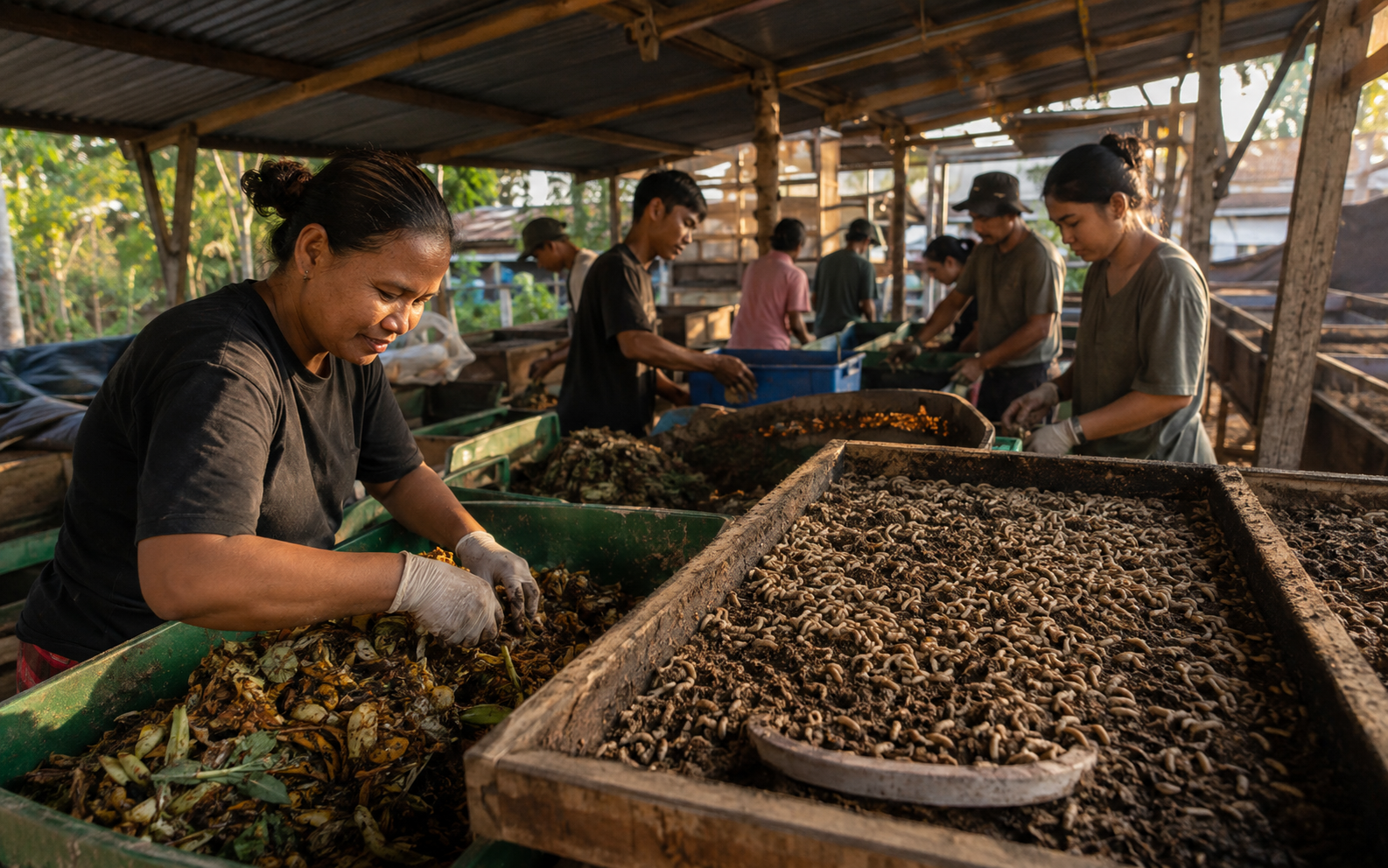
Community workers sorting food waste for maggot bioconversion
Social Program

Food Waste Management Through Maggot Farming

A sustainable food waste program using education and independent bioconversion systems to reduce organic waste sent to landfills, running as Roadshow and Sayembara formats across 10 cities and regencies since January 2024.
77
Communities
IDR 2.5B
Raised
4T / 4000kg
Waste Managed
SDG 8SDG 11SDG 12SDG 13
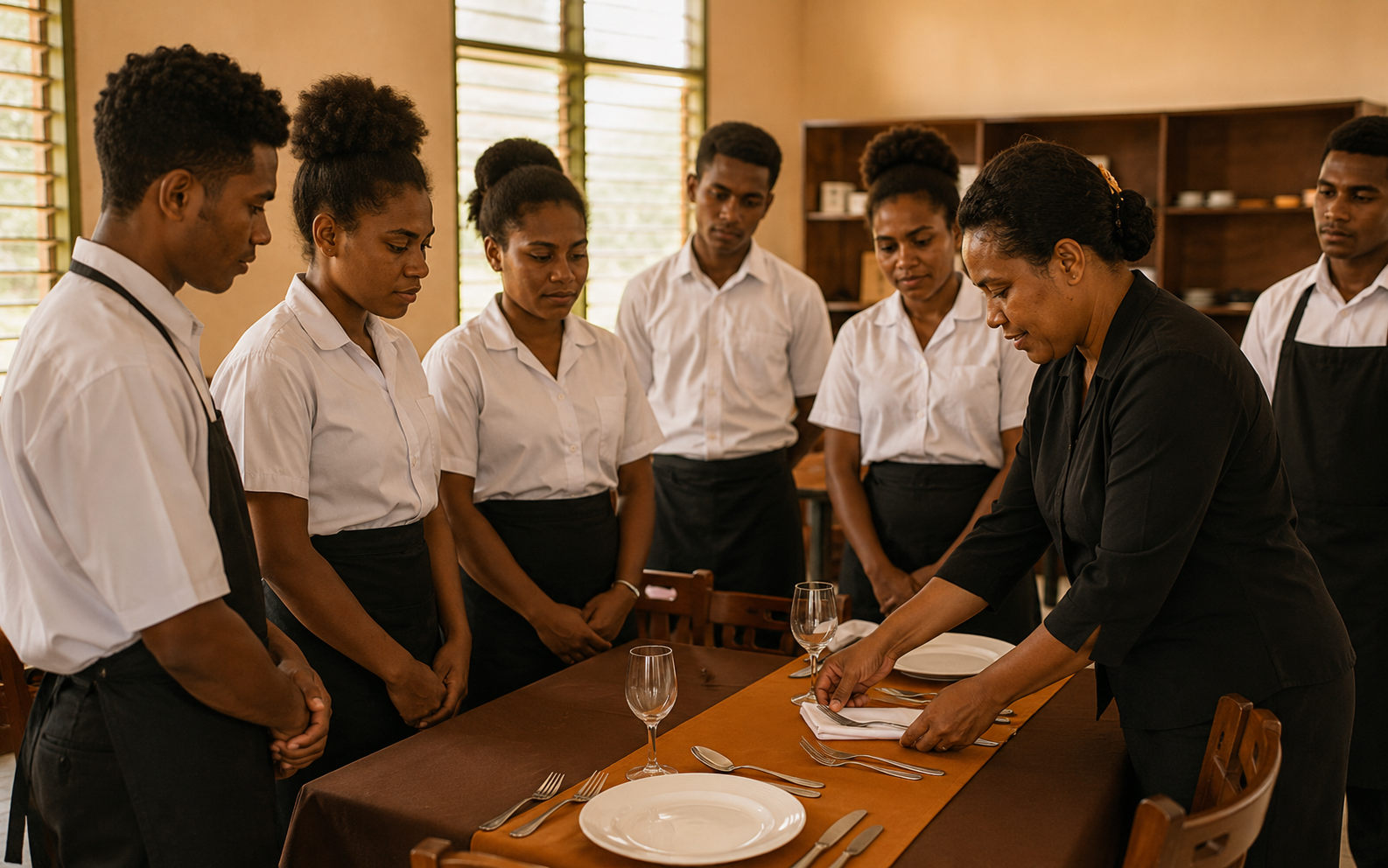
Hospitality training session for Papuan youth
Program Case Study

Service Excellence Training in Papua

Vocational training for underprivileged youth in Jayapura, Papua, preparing them for the growing hospitality and service sectors and addressing the critical shortage of skilled local workers and low representation of indigenous Papuan youth.
80%
Got Employed
IDR 3M
Avg. Income
10+
Partner Companies
SDG 1SDG 4SDG 5SDG 8SDG 10
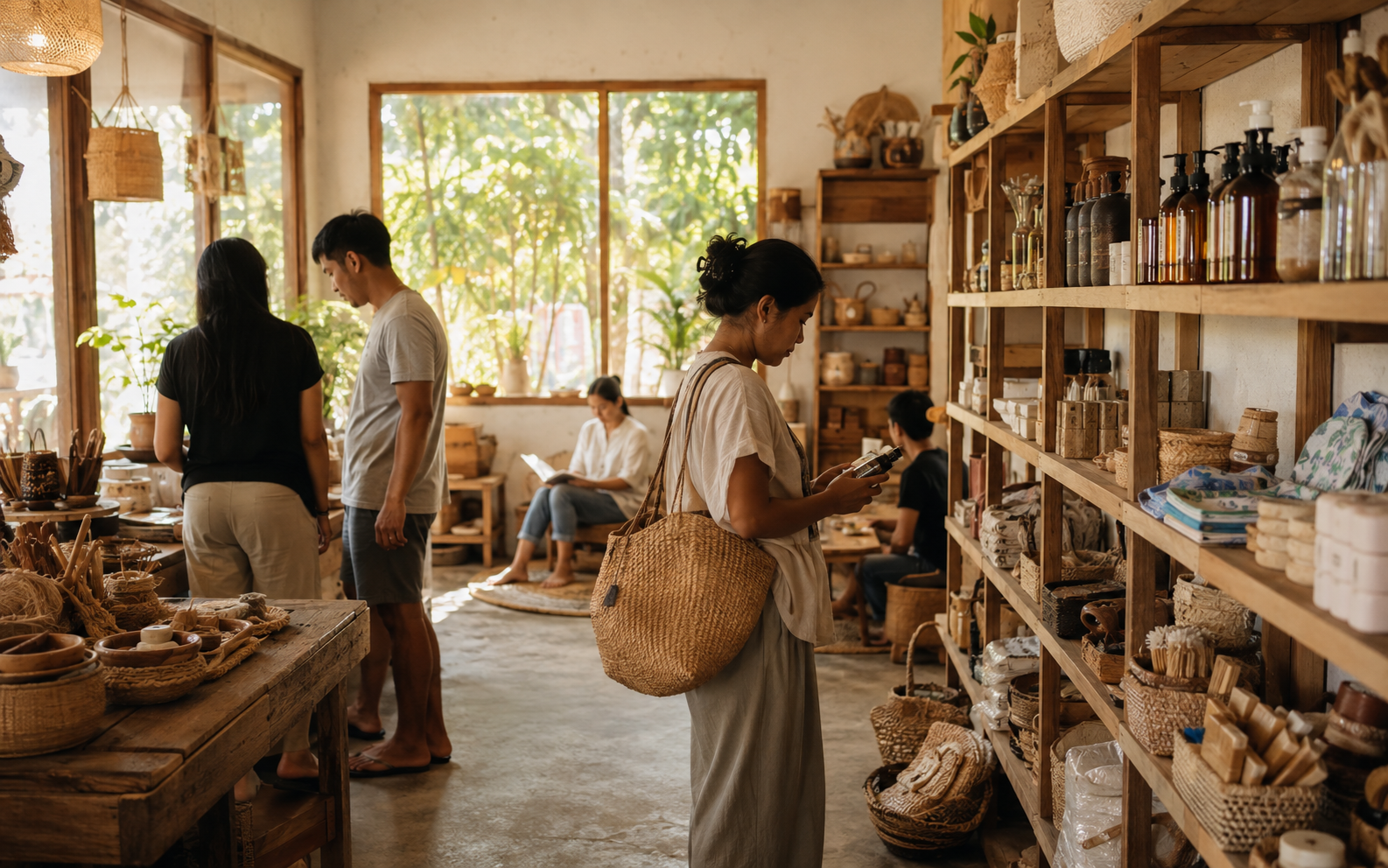
Jaga Bumi Eco Mart interior with sustainable products
Midstream Case Study

Jaga Bumi Eco Mart & Community Hub

A midstream intervention connecting greenpreneur incubation to market access through a curated eco-mart and community learning space. Sales proceeds are reinvested into the next incubation cycle.
B2B
& Retail Channel
4
Program Stages
SDG 8SDG 11SDG 12SDG 13
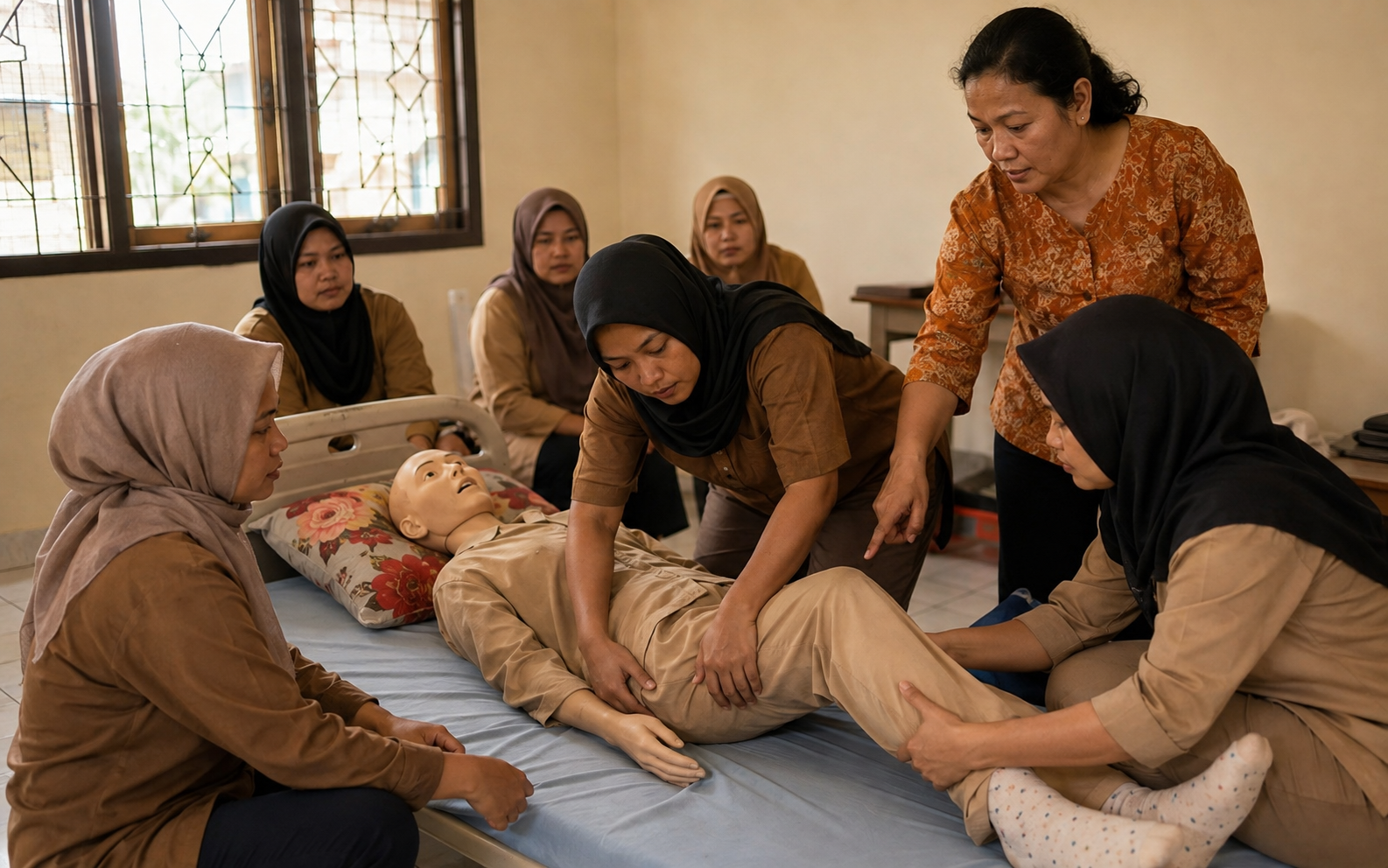
Caregiver training session with trainees practicing patient care
Impact Sourcing

Vocational Training with Insan Medika

Competency-based caregiver training in partnership with LPK Insan Medika Academy Yogyakarta, preparing participants with BNSP-aligned certified skills in elderly care and basic health support, connected directly to employment.
BNSP
Certified Standard
4
Program Stages
SDG 3SDG 4SDG 8SDG 10
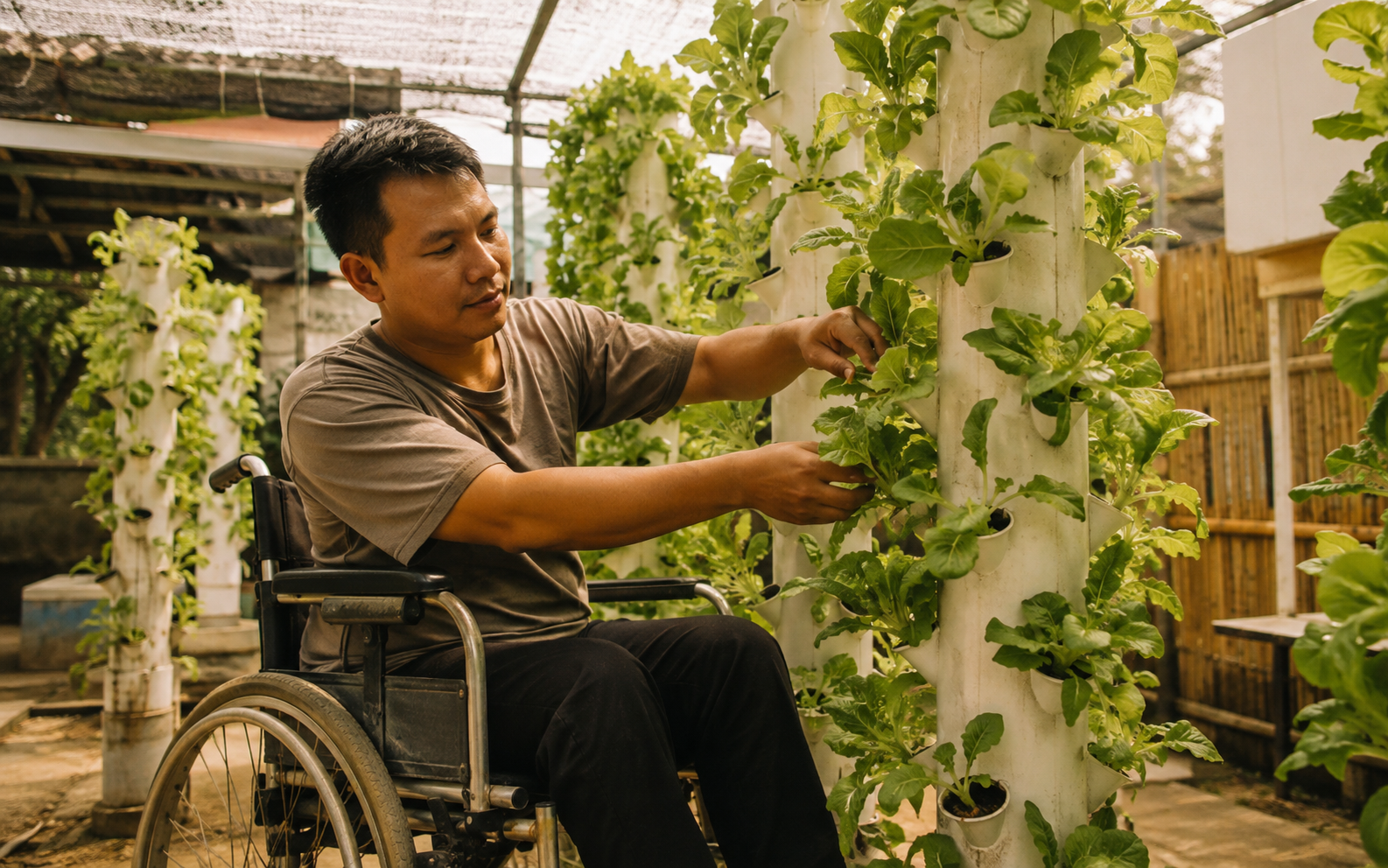
A hydroponic farmer in a wheelchair tending vertical vegetable towers
Program Case Study

Empowering Persons with Disabilities Through Hydroponic Farming

Hydroponic farming is a sustainable, environmentally friendly cultivation method focused on skill development and sustainable economic access for participants, including persons with disabilities.
350kg
Sold / Month
IDR 5.26M
Net Income / Month
SDG 1SDG 2SDG 4SDG 8SDG 10
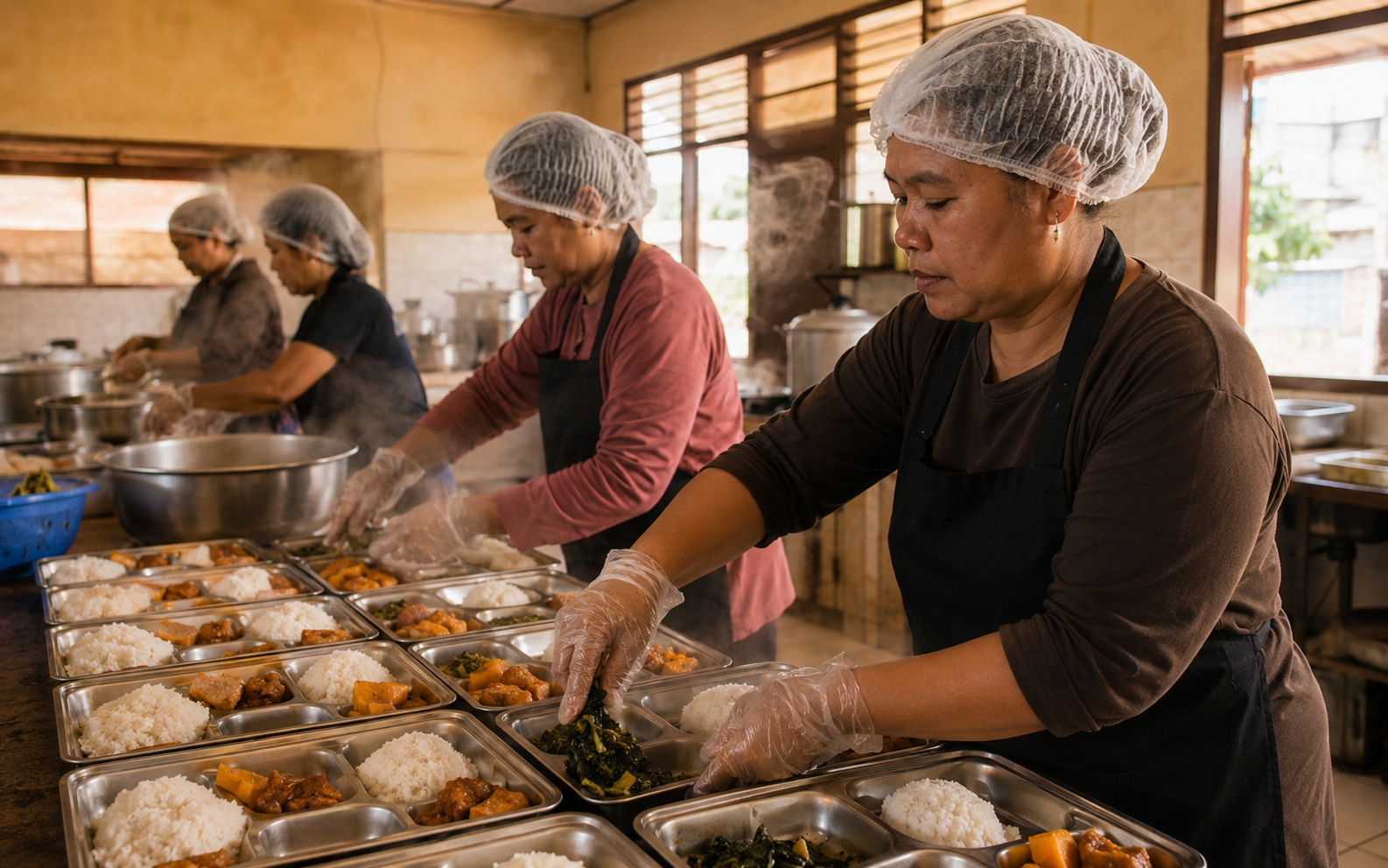
Kitchen staff preparing nutritious meal trays for the SPPG program
Impact Measurement

SPPG Ciangsana: Social & Economic Value

A rigorous economic cost-benefit analysis of a nutrition program, demonstrating that social programs can be investment-grade interventions when backed by credible, structured data.

4.42x
Benefit-Cost Ratio
37%
Economic IRR
IDR 92.5B
Economic NPV

How we measure and
validate impact.

SROI · Social Return on Investment

SEVA · Social-Economy Value Added

1
Establishing Scope
Defining program boundaries based on root causes (e.g. deforestation, low farmer income) and identifying all key stakeholder groups.
P
Pre-Execution
Legal, risk, economic forecast, regulatory, social, environmental, and community empowerment planning before launch.
2
Mapping & Evidence
Mapping outcomes via Theory of Change, then evidencing them with pre/post surveys, satellite imagery, and harvest yield reports.
D
During Execution
Continuous monitoring of economic creation, local growth stimulation, carbon tracking, and regulatory changes.
3
Valuation & Reporting
Establishing attributable impact, calculating the SROI ratio (NPV of Benefits ÷ Total Investment), and reporting to stakeholders and donors.
E
Post-Execution
Evaluation of economic impact, impact deviation, environmental and social impact, and regulatory audit that feeds into the next cycle.
Direct Economic ImpactSkill & Capacity BuildingEnvironmental ValueVolunteer & Participant TimeReputation & ESG Value
Three-Level MeasurementEconomic & Social MultipliersContinuously Correlated

SROI · Social Return on Investment

1
Establishing Scope
Defining program boundaries based on root causes (e.g. deforestation, low farmer income) and identifying all key stakeholder groups.
2
Mapping & Evidence
Mapping outcomes via Theory of Change, then evidencing them with pre/post surveys, satellite imagery, and harvest yield reports.
3
Valuation & Reporting
Establishing attributable impact, calculating the SROI ratio (NPV of Benefits ÷ Total Investment), and reporting to stakeholders and donors.
Direct Economic ImpactSkill & Capacity BuildingEnvironmental ValueVolunteer & Participant TimeReputation & ESG Value

SEVA · Social-Economy Value Added

P
Pre-Execution
Legal, risk, economic forecast, regulatory, social, environmental, and community empowerment planning before launch.
D
During Execution
Continuous monitoring of economic creation, local growth stimulation, carbon tracking, and regulatory changes.
E
Post-Execution
Evaluation of economic impact, impact deviation, environmental and social impact, and regulatory audit that feeds into the next cycle.
Three-Level MeasurementEconomic & Social MultipliersContinuously Correlated

Four ways we partner
with you.

CSR

Program design & implementation aligned with ESG priorities.

Social Marketing

Impact storytelling and brand engagement through Manava & Proud Project.

Impact Measurement

SEVA, SROI & data-driven accountability.

Impact Sourcing

Linking underprivileged communities to real job opportunities.

Ready to create
impact that scales?

We are open to CSR partnerships, program sponsorships, and social impact research collaborations.

Get in Touchpartnership@manavacollective.org